pronounced tie-see
Menu

Menu
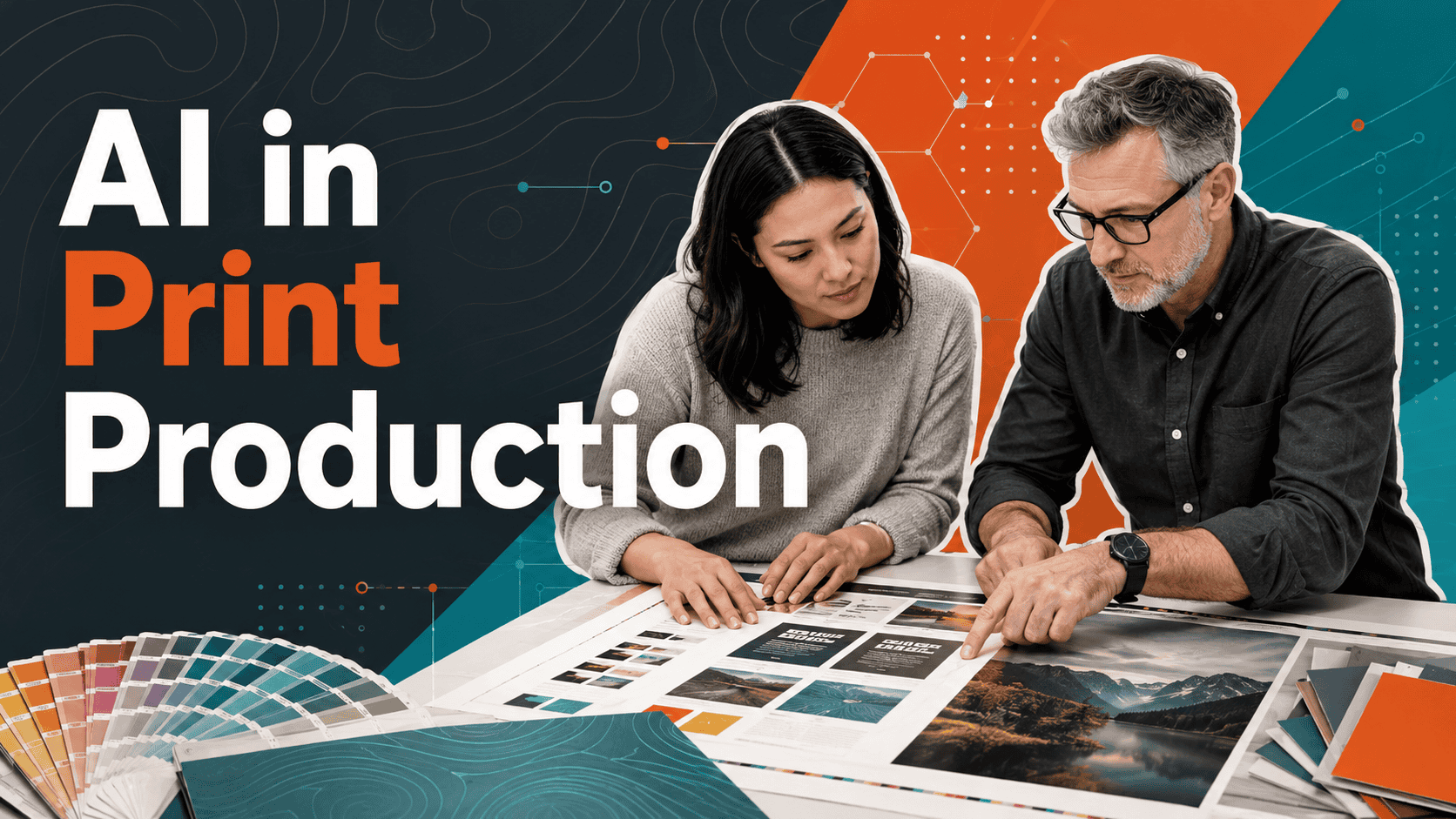
While I participated in the panel discussion at the AIGA Paper Show the other night, I fully intended to mention the topic of this article, but stage fright set in.
It had been on my mind ever since our esteemed host, Derek Desormeaux, presented the panel question:
“How has AI affected the designer’s perception of the print industry?”
Also, while rationing out the homemade chocolate chip cookies I brought to bait the Thysse booth, AI was easily the most common topic of discussion that evening.
Prior to the event, I met with leadership at Thysse to discuss the boundaries around what I could and couldn’t share about our uses of AI during the panel discussion. The consensus was, understandably, “be cautious” and “keep the cards close to your vest.”
So I did. My response was watered down.
I went home still thinking about the question—and my answer. I’d stayed, perhaps, a little too cautious. So, with the luxury of time, I’d like to take another crack at it and bring the conversation closer to the edges of what I can share.
For as long as print has existed, there have been two distinct worlds operating side by side—sometimes in harmony, sometimes in tension.
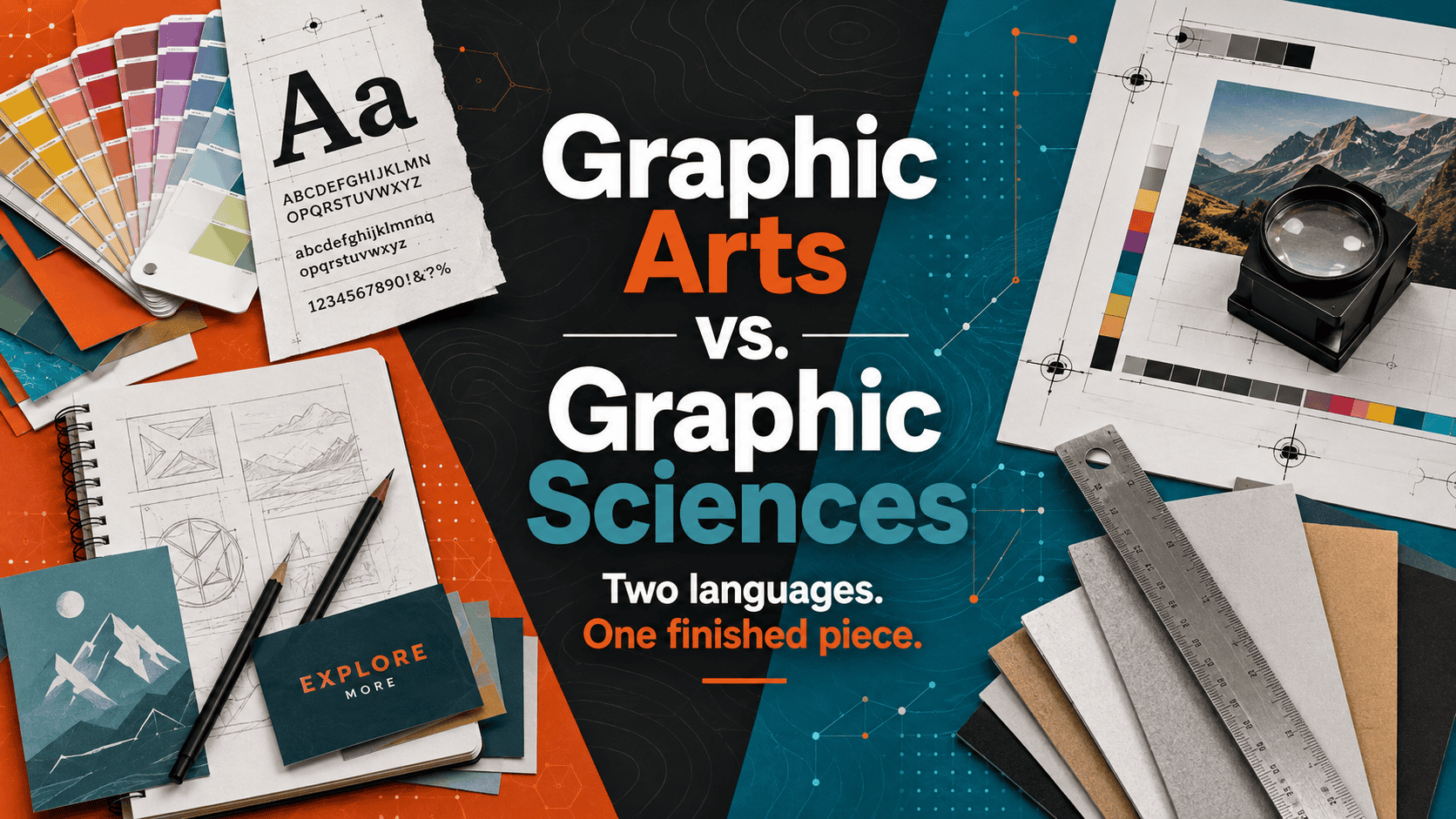
On one side: the Graphic Arts. The world of designers, art directors, and brand storytellers. People who think in color, composition, and emotion. People who believe that a well-crafted physical brand experience can stop someone in their tracks, shift how they feel about a company, and burrow into memory in ways screens often can’t.
On the other: the Graphic Sciences. The world of prepress technicians, production engineers, press operators, and finishing specialists. People who think in CMYK values, substrate tolerances, dot gain percentages, postal regulations, and bindery specifications. Who understand that what looks beautiful on a monitor still has to survive the journey through ink, paper, heat, pressure, machinery, and logistics before it becomes something worth holding.
These two worlds have always needed each other. But for most of print’s history, the gap between them has been wide—and expensive.
A designer submits a file. Production finds three preflight errors, two font issues, and a color profile that will shift unpredictably on press. The file goes back. Revisions are made. Proofs are exchanged. Time is lost. Budgets tighten. And somewhere in the back-and-forth, a little creative momentum dies.
It’s a story every marketing team, designer, and print partner knows well.
The divide was never really about competence on either side. It was about language.
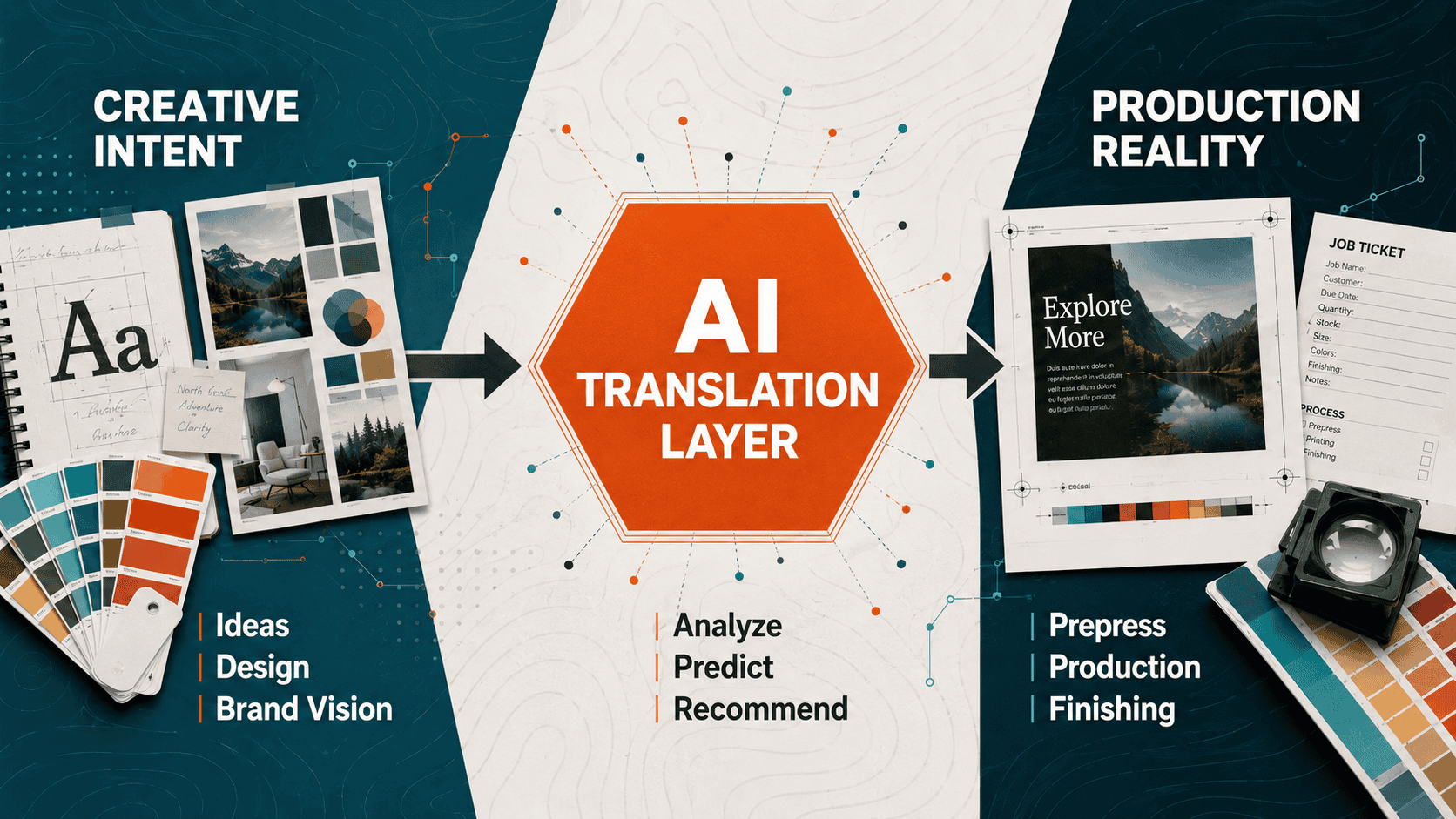
Designers speak the language of intent and emotion. Production speaks the language of process and constraint. For decades, the translation between those two languages has been slow, manual, and imperfect.
That’s what makes this moment so interesting.
What AI is doing inside the print industry isn’t simply automation. It’s translation.
Artificial intelligence is becoming remarkably effective at understanding both languages simultaneously—and helping bridge the gap between them in real time.
That shift matters more than I think many people realize.
Historically, complexity in print almost always introduced compromise. Creative teams adjusted ideas to fit production realities. Production teams spent enormous amounts of time translating, correcting, troubleshooting, and preserving intent as projects moved toward manufacturable reality.
AI is beginning to reduce the amount of compromise required between those two worlds.
That doesn’t mean constraints disappear. It doesn’t mean expertise disappears either. But it does mean the process becomes less adversarial and more collaborative.
We’re already seeing this happen in practical ways.
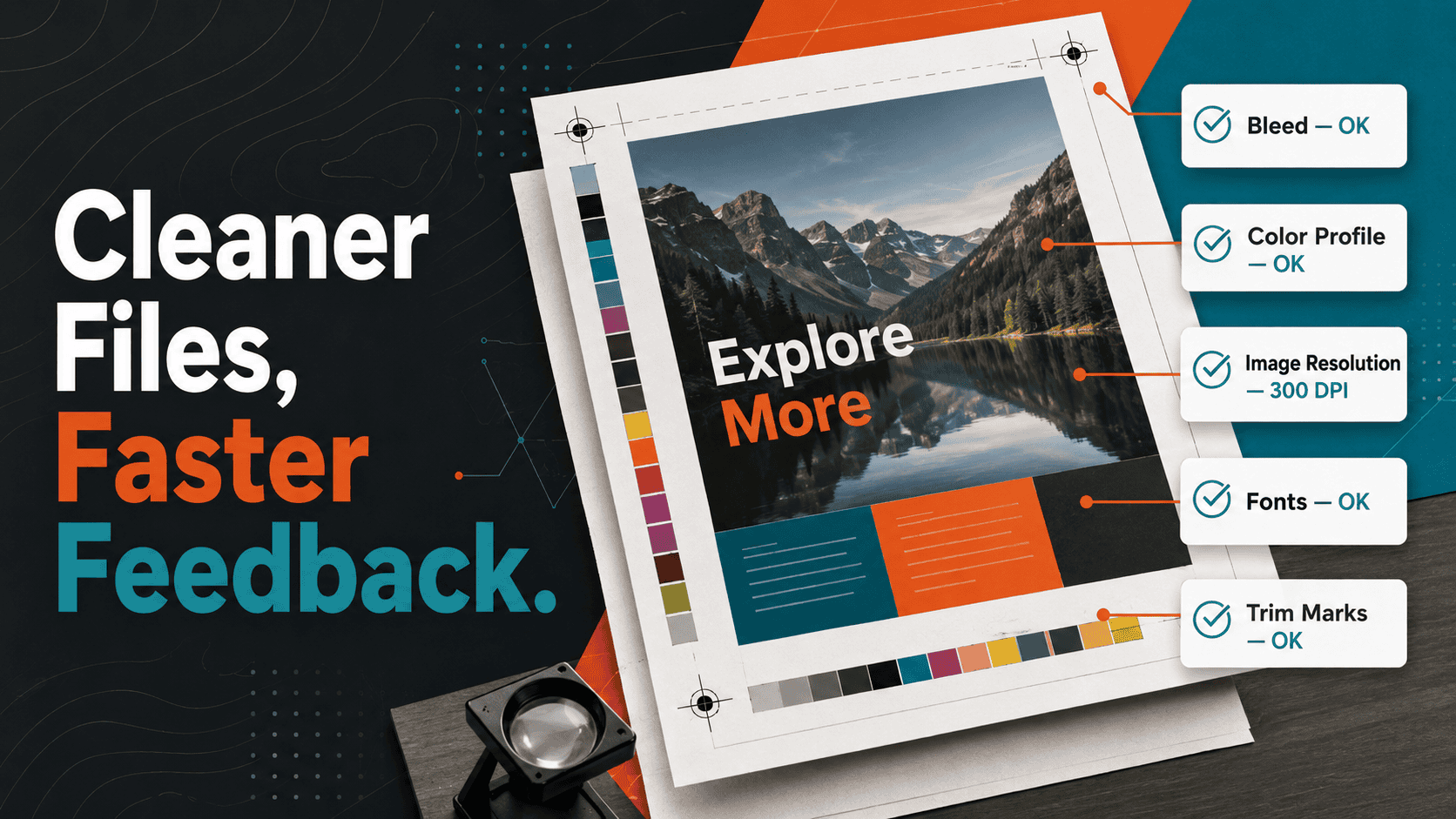
In prepress and file preparation, AI-powered tools can now identify issues that once required extensive manual review—incorrect color profiles, missing bleeds, font substitutions, low-resolution assets—and flag them before a job ever reaches production. What used to take hours increasingly takes seconds. Designers get feedback faster. Production receives cleaner files. Momentum survives longer.
In color management, machine learning is becoming increasingly effective at predicting how color behaves across different substrates, press conditions, coatings, and finishing processes. The gap between what a designer sees on screen and what a customer ultimately holds in their hands is narrowing—not because creative vision is being simplified, but because the systems supporting it are becoming more intelligent.
In personalization and variable data printing, AI is accelerating something the print industry has been moving toward for years: mass customization without operational collapse. Campaigns containing tens of thousands of uniquely versioned pieces are becoming more manageable to execute, opening the door for more relevant, personalized communication without the production friction that once made those ideas difficult to scale.
And in workflow management, AI-driven systems are beginning to optimize production scheduling, inventory coordination, and job sequencing in ways that reduce bottlenecks and waste while improving turnaround times on increasingly complex projects.
But what interests me most about all of this isn’t efficiency alone.
Efficiency is valuable, of course. Every organization wants to move faster and operate more intelligently. But I don’t think the real story is that AI eliminates the need for creative or production expertise.
If anything, I think it raises the ceiling on what thoughtful teams can accomplish together.
As routine friction decreases, the opportunity shifts toward more sophisticated execution—more personalization, more integrated workflows, more ambitious creative, more complex campaigns, and more seamless coordination between design intent and production reality.
In other words, AI doesn’t remove the need for collaboration between the Graphic Arts and the Graphic Sciences. It deepens the relationship between them.
The best use of AI in print is not replacing human judgment. It’s preserving more room for it.
When a press operator spends less time manually troubleshooting files, more time can be spent on the nuanced production decisions that actually require experience and intuition. When designers receive faster feedback about how choices will behave in the real world, they can make stronger creative decisions earlier in the process instead of adapting late under pressure.
The conversation between creativity and production becomes faster, clearer, and more aligned.
At Thysse, we’ve spent decades operating at the intersection of these two worlds. We’ve always believed that exceptional print requires both—the creative ambition to imagine something worth producing and the technical mastery to produce it faithfully.
AI is giving the industry better tools to honor both sides of that equation simultaneously.
And for the brands we partner with, that means something important: not simply faster production, but fewer compromises between vision and execution.
The gap between the Graphic Arts and the Graphic Sciences is narrowing. The translation is getting easier. And the possibilities for what thoughtful teams can create together are expanding quickly.
I hope I get another chance to preach this message to the wonderful AIGA community someday. I think the conversation is just getting started.