pronounced tie-see
Menu

Menu
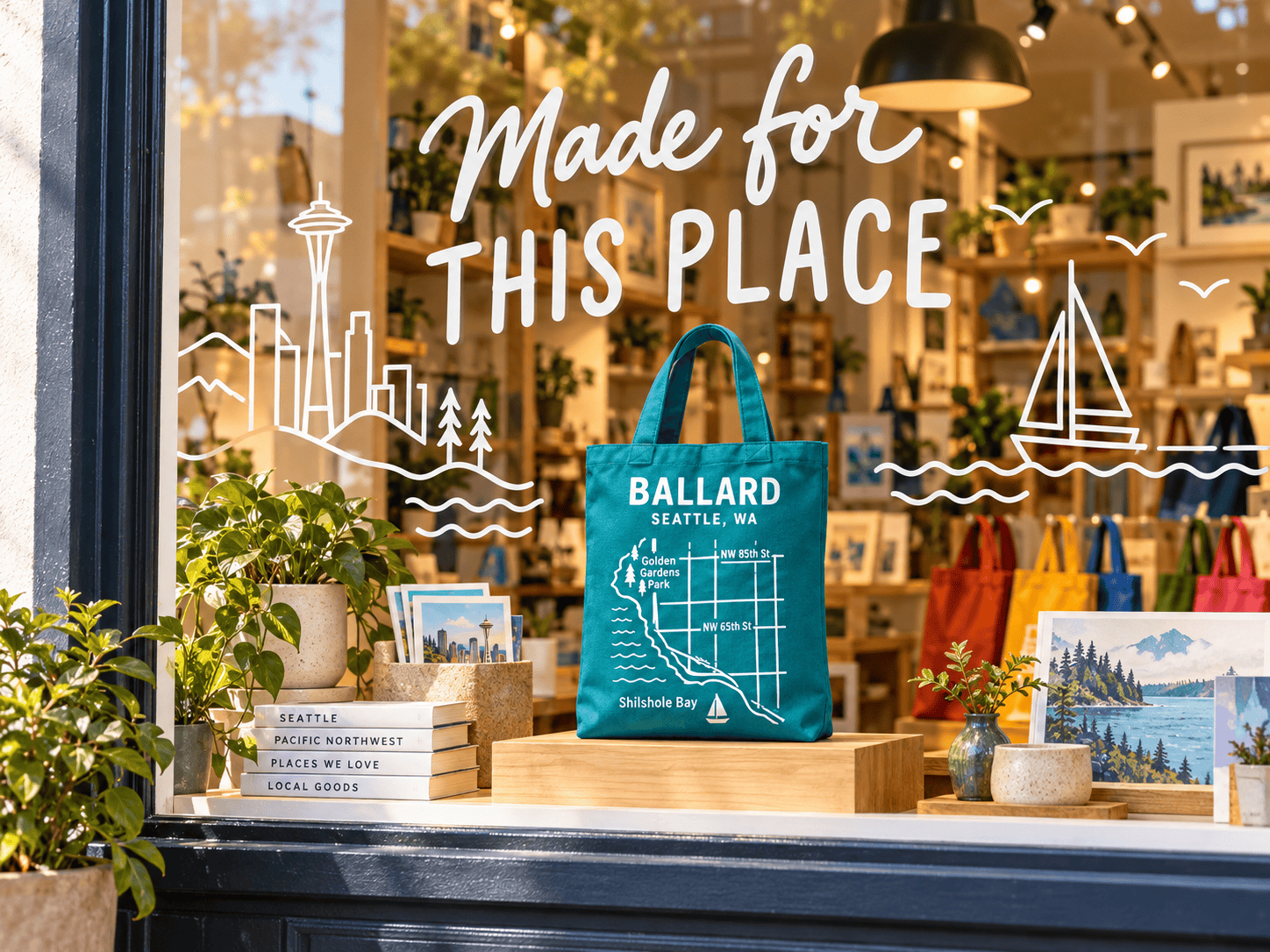
A strong retail brand should feel recognizable wherever customers find it. But every store also lives somewhere specific, with its own streets, landmarks, routines and personality.
Across multi-location retail programs, Thysse has helped brands bring those two things together: keeping the larger campaign consistent while giving individual locations something that feels distinctly their own.
For this program, Thysse has produced more than 5,000 custom-printed totes across 50+ store locations, giving customers a gift they can only get at their local store — and making it feel like it belongs there.
About this case study: This story reflects real Thysse experience across multi-location retail programs. Client-identifying details have been anonymized and select examples combined to illustrate the approach. Accompanying imagery is AI-generated for illustrative purposes.
Many multi-location retailers operate in districts and neighborhoods with a strong sense of place. The larger brand may be consistent from city to city, but the world immediately outside each storefront is anything but.
That creates an interesting challenge.
A single national promotional design is easy to roll out, but it misses an opportunity to make an individual store feel connected to where it actually lives.
Go too far in the other direction and dozens of local versions can quickly become dozens of separate projects to proof, produce, inventory and ship.
For a 50+ store rollout, the goal was to find the middle:
Make every location feel distinct without losing the system that holds the campaign together.
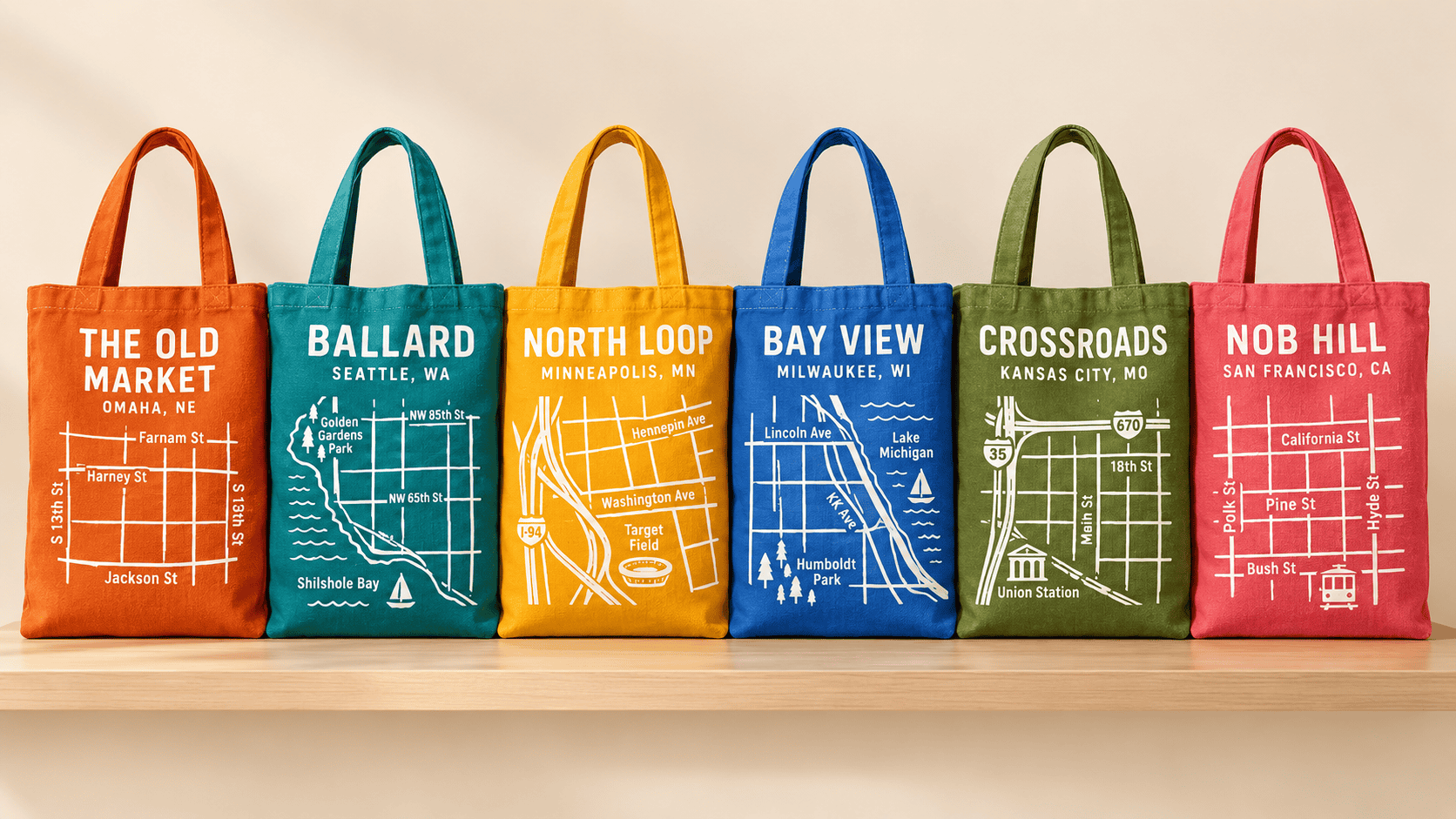
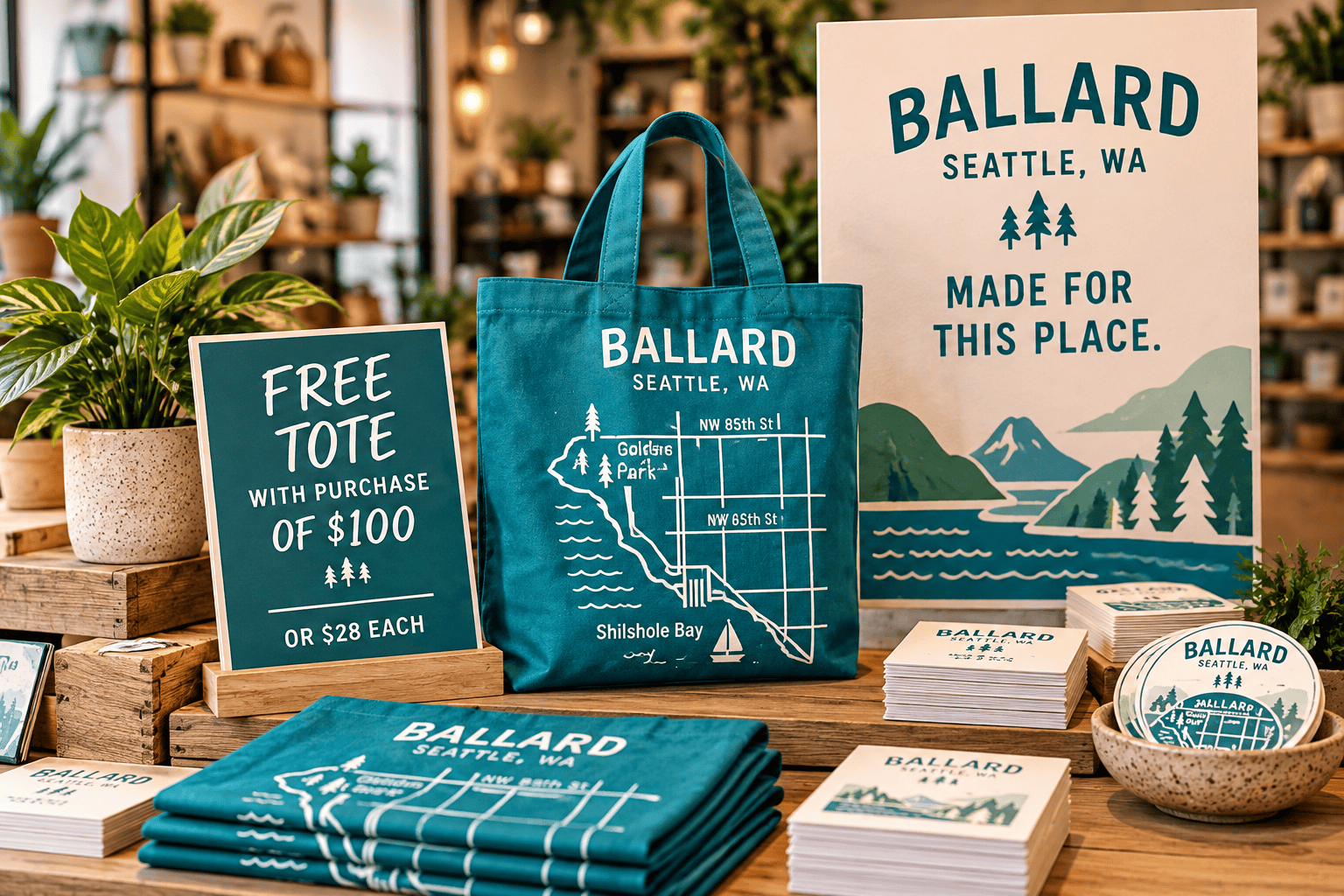
Colorful canvas totes became the gift-with-purchase centerpiece.
Each location could receive its own variation while the broader design language stayed consistent. Place-based elements might include a neighborhood name, simplified street pattern, bridge, park edge, landmark or another recognizable feature of the area.
The opportunity was to go more specific than a city name alone — something that felt rooted in this neighborhood, this part of town, this store.
That little bit of specificity gives the promotion a natural sense of exclusivity. The tote at one location isn’t the tote at the next.
And because the visual references come from the place itself, the merchandise has a better chance of feeling relevant, collectible and worth carrying long after the promotion ends.
A shared design system makes the idea scalable.
Typography, layout and overall visual structure stay consistent across the campaign. The location-specific elements change within that framework.
One tote might be anchored by a neighborhood name and simplified street grid. Another might draw on a bridge, waterfront edge, park or recognizable pattern in the surrounding area.
The details change.
The rules don’t.
That consistency helps keep a highly versioned program manageable through production design, proofing and manufacturing while still giving every location something distinctly its own.
For customers, the personality comes through in the place.
For the retailer, it still functions as one cohesive campaign.
The tote was only one piece of this retail reset.
Thysse also produced and coordinated:
The piece customers took home connected naturally with the campaign they saw throughout the store.
Then there was the less glamorous part that can make or break a 50+ location rollout: getting the right materials to the right place.
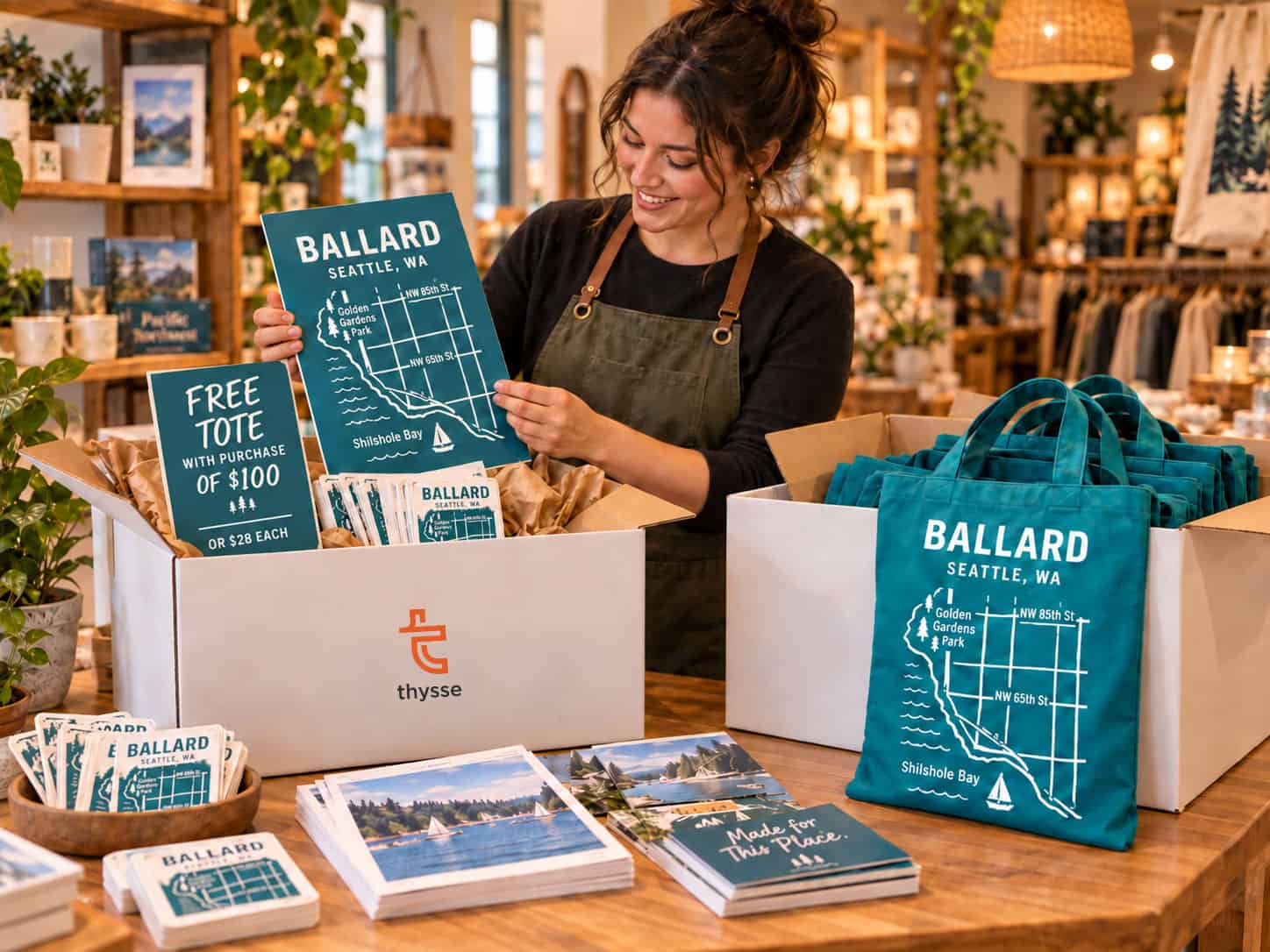
Thysse kitted each reset by location, pairing the correct tote inventory with the graphics, signage and printed materials intended for that specific store.
One location. One coordinated kit. Less sorting and guesswork at the store — and fewer logistics questions rolling back to HQ.
Across a 50+ store program, location-specific promotional pieces can still operate within one consistent production system.
Stores receive the version intended for their location alongside the corresponding materials needed for the reset.
For customers, the experience feels local.
For the team managing dozens of locations, it stays coordinated.
That same location-by-location system carried through the rest of the reset, helping each store receive the right combination of promotional merchandise, graphics and print as one coordinated program.
The relationship has continued beyond the localized campaign, including custom holiday bags and more than 20,000 additional totes produced this year.
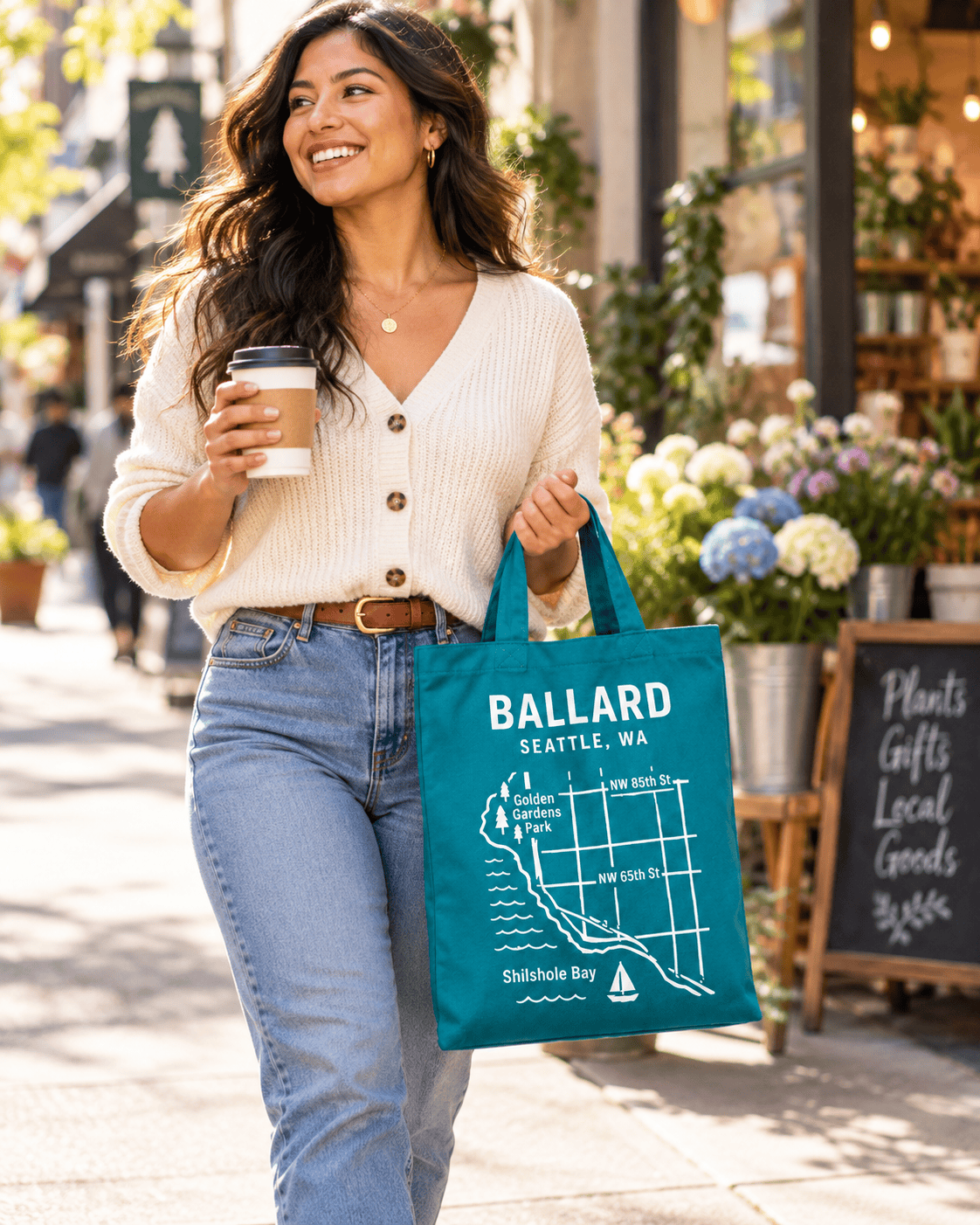
When a larger retailer opens a storefront in a neighborhood, it joins a place people already have a relationship with.
There are streets they walk, parks they use, landmarks they recognize and routines that make one part of town feel completely different from another.
Paying attention to those details can give customers another way to connect with the store.
Research suggests that relevance has real value. Deloitte reports that in a 2024 personalization study, 80% of surveyed consumers said they prefer brands that offer personalized experiences and reported spending 50% more with brands that provide them.
Neighborhood localization isn’t the same thing as one-to-one personalization, of course. But the underlying idea is similar: relevance makes an experience feel more meaningful.
There’s also real affinity built around local communities. American Express found that 63% of consumers say shopping small makes them feel personally connected to their community, while 67% say supporting small businesses helps unite their community.
A larger retailer doesn’t need to pretend it’s a mom-and-pop shop to tap into that sense of place.
It can celebrate the neighborhood that was already there. And where it makes sense, localization can grow into genuine collaboration — highlighting community favorites, partnering with nearby organizations or creating promotions that help customers discover more of what makes the area distinctive.
That’s what showing up like a neighbor can look like.
And the idea travels well beyond retail.
A university could celebrate the streets, parks and landmarks surrounding its campus. An office could incorporate neighborhood details into an employee welcome kit. A hotel could give guests something tied to the district waiting just outside its doors.
For any organization with a physical location, local relevance can help turn an address into a stronger connection with the people around it.
Yes. A shared template can make it possible to version copy, imagery or other location-specific details while maintaining consistent branding and production standards across the larger campaign.
Promotional merchandise can be produced alongside window graphics, POP signage, fixture inserts and other printed materials, then sorted and kitted by location so every store receives the correct combination together.
Depending on the campaign, kits can include promotional products, window graphics, POP signage, fixture graphics, printed collateral and other location-specific pieces needed for the store reset.
Absolutely. Universities, corporate offices, hospitality brands and other organizations with a physical presence can use localized merchandise and print to acknowledge the places around them and create experiences that feel more connected to the communities they serve.
Thysse can bring promotional products, retail graphics, printed materials and store-by-store kitting together so a highly versioned idea stays fun for your customers — and manageable for your team.