pronounced tie-see
Menu

Menu
There’s a particular kind of fiscal responsibility that ultimately ends up costing more money. It looks like prudence. It involves phrases like “we’ll revisit this next cycle” and “let’s see how enrollment numbers shake out.” It is, in practice, a decision to pay more for the same outcome later.
This isn't an argument for reckless spending. The math on waiting has gotten genuinely worse with increased costs of construction and deferred maintenance on top of enrollment competition. In addition there's the counterintuitive pressure that in a world growing more digital and more saturated with AI-generated content, physical space isn't losing value. It's gaining it.
At the exact moment higher education is under the most budget pressure it has faced in decades, the experience of the built environment has become more valuable as a differentiator—not less.
Consider what’s happening to digital channels. McKinsey reports that 78% of organizations now use AI in at least one business function, and the volume of AI-generated content online has grown accordingly. Deloitte’s research documents a measurable rise in screen fatigue, with users growing more skeptical of digital-first experiences precisely because there are so many of them. Meanwhile, return-to-office rates in the corporate sector climbed from 35% to 68% between 2023 and 2024—a signal that people, when given the choice, are increasingly drawn back to spaces that facilitate personal interaction.
When every inbox is full of AI-generated email and every social feed is algorithmically optimized, a physical space that feels considered, welcoming, and distinctly itself carries a kind of weight that a banner ad simply cannot.
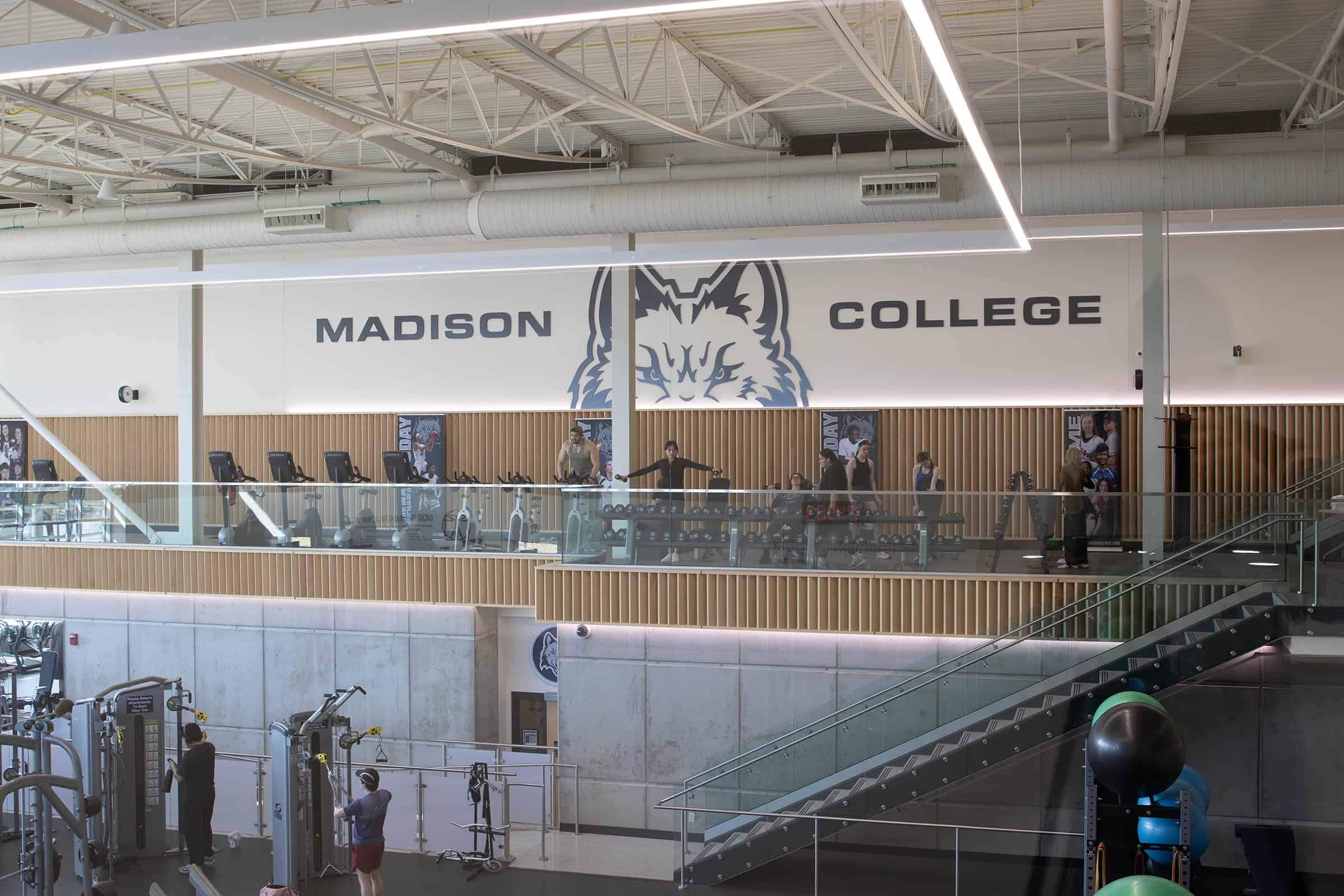
The stakes are clearest in recruitment. The well-documented demographic cliff—a projected decline in traditional college-age students through the late 2020s—means institutions are competing more intensely for a smaller pool. Prospective students and their families tour campuses and make consequential decisions, at least partly, on the basis of how a place feels.
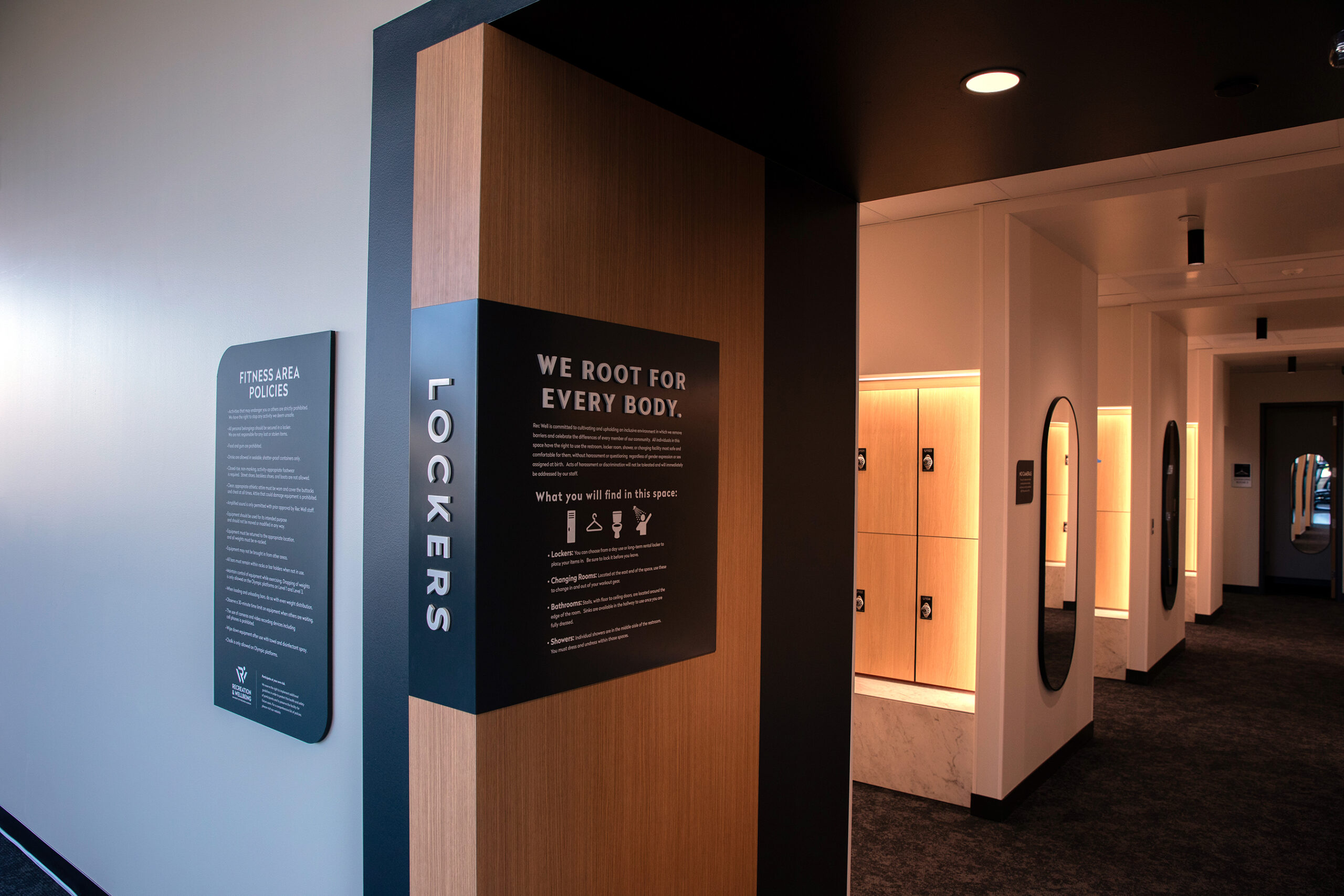
Research consistently links environmental clarity such as intuitive wayfinding, coherent signage, and a legible sense of institutional identity, to belonging and retention outcomes. And belonging, it turns out, is among the most reliable predictors of student persistence. Surveys of incoming students have found that a significant share experience real navigation difficulties on campus during their first weeks.
Prospective students tour a lot of campuses. The ones that feel invested in, legible, and proud of themselves stay in memory differently than the ones that don’t. The irony is that facility branding investments like wayfinding systems, building entry sequences, and exterior campus identity are among the highest-visibility, lowest-cost-per-impression investments an institution can make. They’re also among the most frequently deferred.
The practical case for acting now, even in a constrained budget environment, comes down to three compounding pressures.
+18.5% increase in the Producer Price Index for nonresidential construction inputs at peak (2022)—and costs have not returned to pre-pandemic norms. — U.S. Bureau of Labor Statistics
3.6% Higher Education Price Index increase in FY2025—nearly double the 2.2% historical average. The cost of doing anything on a university campus is rising faster than general inflation. — HEPI / Commonfund
>32% deferred maintenance shortfall at many institutions, with backlogs exceeding $140 per gross square foot—and growing each year renewal work is deferred. — Gordian Facilities Condition Assessment
That third number is worth exploring more deeply. Deferred maintenance functions like compound interest, except it works against you. Every year the backlog grows. The eventual project becomes larger, more disruptive, and ultimately more expensive. Experiential graphic design work done in parallel with needed maintenance is dramatically more cost-efficient than scheduling separate mobilizations. The coordination savings are real, and they disappear when projects are separated by years.
Taken together, these three pressures mean that a project deferred one budget cycle is rarely the same project when it comes back around. It’s a bigger project, at a higher unit cost, and is competing for funding against a larger backlog.
None of this requires a wholesale renovation strategy. When the budget is uncertain, the problem isn't necessarily the budget. The problem is the order of operations.
High-visibility, low-regret investments share three characteristics: they would need to be done regardless of timing, they have outsized impact on first impressions and day-to-day experience, and they hold their value across a range of future institutional scenarios. Building entry sequences, exterior wayfinding, campus identity signage at key arrival points, and student-facing environmental graphics in high-traffic spaces fit all three of these characteristics.
Facility enhancements that are intentionally designed to perform fit neatly into the category of investments that look right in every outcome, not speculative or temporary expenditures just for show. When recruitment increases, it’s a smart brand investment. If budget pressure intensifies further, it’s already done. If a larger renovation follows, it acts as a standards guide that shapes everything that comes after.
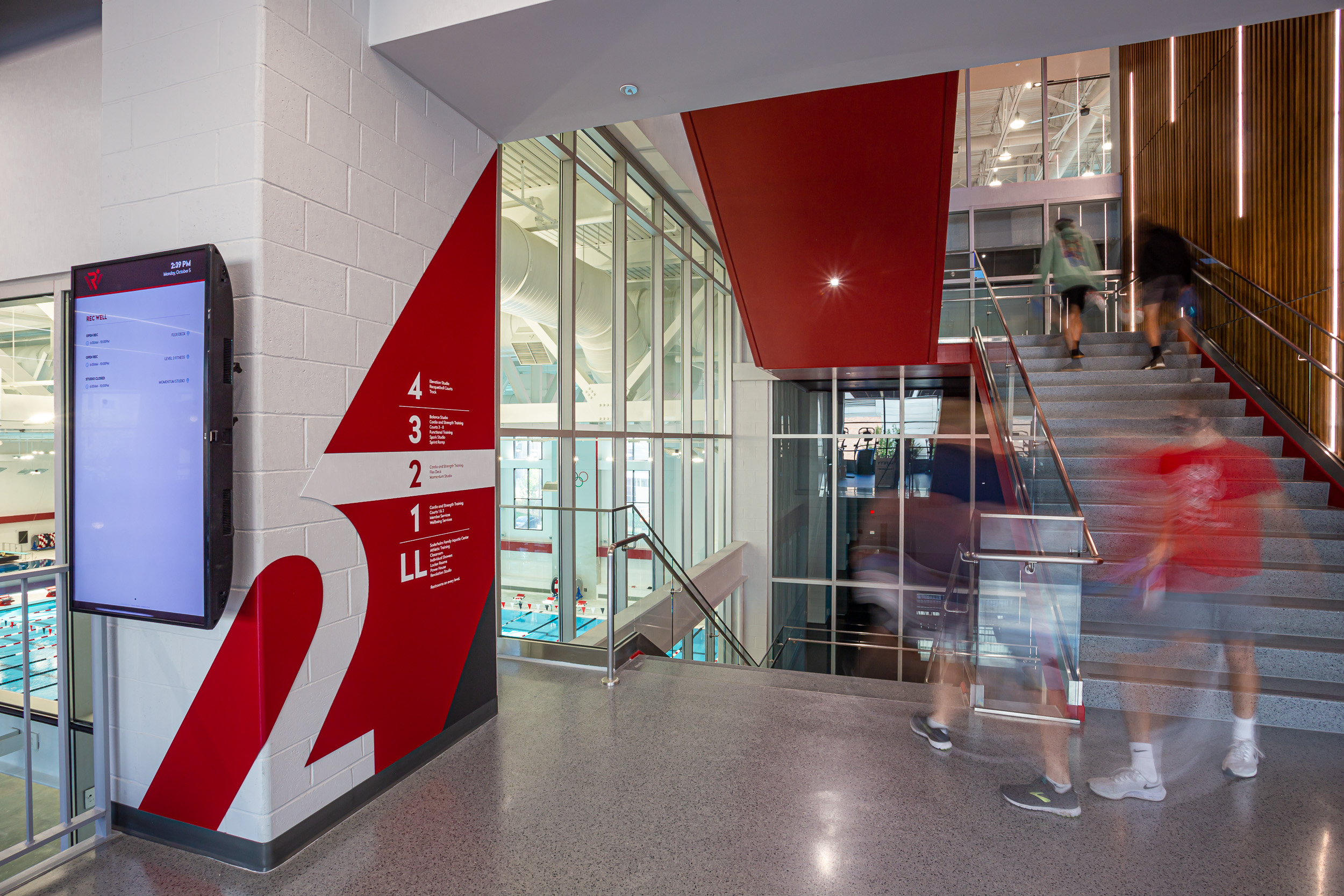
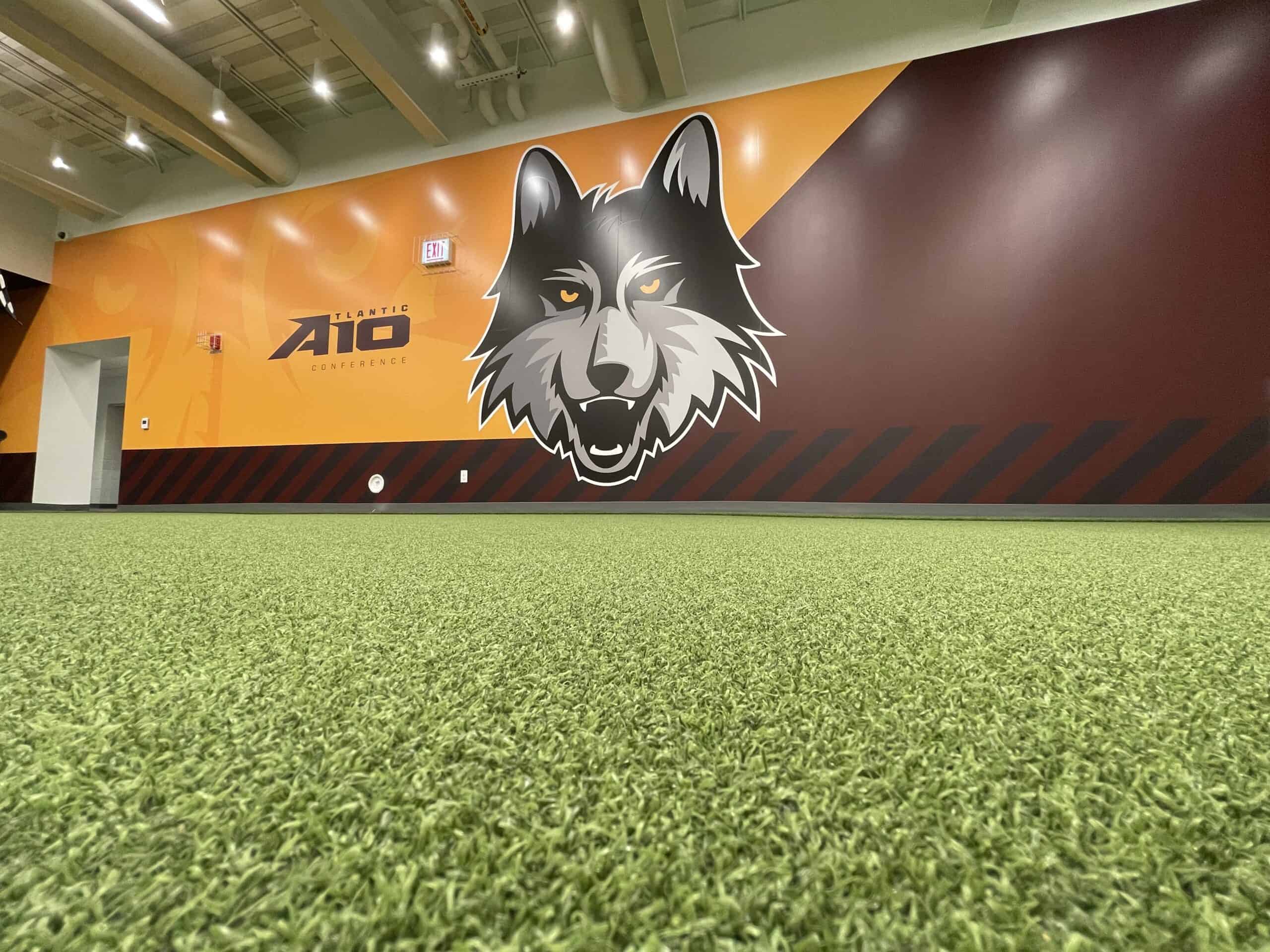
It’s “spend now on the things you’ll have to spend on anyway before the same work costs more, and before the competitive window narrows further.”
Phased investment also offers something underappreciated in higher ed capital planning: momentum. A visible, well-executed entry sequence or wayfinding system signals institutional care to every student, faculty member, and prospective family who walks through campus. That signal compounds in ways that a deferred project never can.
Facilities professionals are accustomed to the question “can we afford to do this?” It’s the right question most of the time. But in the current environment, there’s a companion question worth asking alongside it: can we afford to keep not doing this?
The costs of inaction aren’t invisible. They show up in construction estimates that are higher every year, in deferred maintenance that grows quietly in the background, in prospective students who toured three other campuses before they got to yours, and in the cumulative impression that a place hasn’t been cared for.
Phased facility investment, focused on the highest-visibility moments in the campus experience, is not a luxury argument. In 2026, it’s increasingly a fiscal argument with directly measurable outcomes.
The math doesn’t favor waiting.
Sources & References
U.S. Bureau of Labor Statistics. Producer Price Index: Net Inputs to Nonresidential Construction, Goods (WPUIP2312001). bls.gov
Commonfund Institute. Higher Education Price Index (HEPI), FY2025. commonfund.org
Gordian. Facilities Condition Assessment Benchmarks and Deferred Maintenance Data, 2024. gordian.com
McKinsey & Company. “The State of AI,” 2024. mckinsey.com
Deloitte. Digital Consumer Trends Survey, 2024. deloitte.com
CBRE / JLL. Return-to-Office Trends, 2023–2024.
SCUP / APPA. Campus Planning and Facilities Research. scup.org / appa.org